Choosing the right location is one of the most important decisions for any retail business. Whether you run a small boutique or manage a premium brand, your location directly affects how customers find you, how they perceive your brand, and how often they return. A good product alone is not enough. If the location does not support visibility, accessibility, and customer experience, even strong retail concepts can struggle. This is why selecting the right retail location in Janakpuri West Delhi requires careful planning rather than quick decisions.
Retailers today face more competition than ever. Customers have many choices, both online and offline, and their expectations are higher. They look for convenience, comfort, and trust when deciding where to shop. A boutique store may depend on discovery and personal interaction, while a premium brand relies on consistency and brand image. In both cases, the surrounding environment plays a major role in shaping buying behaviour.
Many retailers focus only on footfall or rent when choosing a location. While these are important, they are not enough. Factors like customer profile, visibility, accessibility, nearby businesses, and long-term growth potential matter just as much. A busy area that attracts the wrong audience can be more harmful than a quieter location that attracts the right customers.
In West Delhi, areas with organized commercial activity, mixed retail presence, and strong connectivity offer better long-term value for retailers. When chosen wisely, a retail location becomes more than just a shop address—it becomes a growth partner for the business.
This blog explains what retailers, from boutique owners to premium brands, should look for in a location. It focuses on practical factors that help build steady sales, strong brand perception, and long-term retail success.
Key Takeaways
-
Choosing the right retail location is critical for both boutique stores and premium brands.
-
A retail location in Janakpuri West Delhi works best when customer profile, visibility, and brand positioning align.
-
High footfall is valuable only when the crowd matches your target audience.
-
Store visibility, frontage, and surrounding environment strongly influence walk-ins and trust.
-
Rent should always be evaluated against realistic revenue potential, not prestige alone.
-
Accessibility for both customers and staff impacts repeat visits and long-term stability.
-
The best retail locations support brand image, daily operations, and future growth.
Understanding the Difference Between Boutique and Premium Retail Needs
Boutique stores and premium brands often target different audiences, but both depend heavily on location to succeed.
Boutique stores usually focus on uniqueness, personal experience, and niche products. They benefit from areas where customers enjoy browsing and discovering new brands.
Premium brands, on the other hand, rely on trust, brand perception, and consistency. Their locations must reflect quality, professionalism, and reliability.
Despite these differences, many location factors overlap. The key is understanding how each factor aligns with your brand positioning.
Customer Profile Comes Before Footfall
High footfall is attractive, but the right customer profile is more important.
Before choosing a location, ask:
-
Who visits this area daily?
-
What is their age group and spending power?
-
Are they browsing shoppers or task-oriented buyers?
-
Do they match your target audience?
A boutique selling handcrafted or designer products may perform better in an area where customers enjoy spending time, even if footfall is moderate. A premium brand may prefer a location where customers are already accustomed to quality retail environments.
A retail location in Janakpuri works well when the customer profile aligns with what you sell, not just because it is busy.
Visibility and Store Frontage Matter a Lot
Your store should be easy to see and easy to enter.
Good visibility includes:
-
Clear frontage facing the main walking path
-
Strong signage opportunities
-
Proper lighting
-
Unobstructed view from a distance
In busy retail areas, many stores compete for attention. A poorly positioned store—even in a great market—can struggle.
Premium brands, in particular, must ensure their storefront reflects their brand value. Boutique stores benefit from inviting displays that encourage walk-ins.
Brand Image and Location Must Match
Your location speaks for your brand before customers step inside.
If you sell premium products, operating from a poorly maintained or cluttered area can damage trust. Similarly, a boutique brand focused on creativity and lifestyle may feel out of place in a rigid corporate zone.
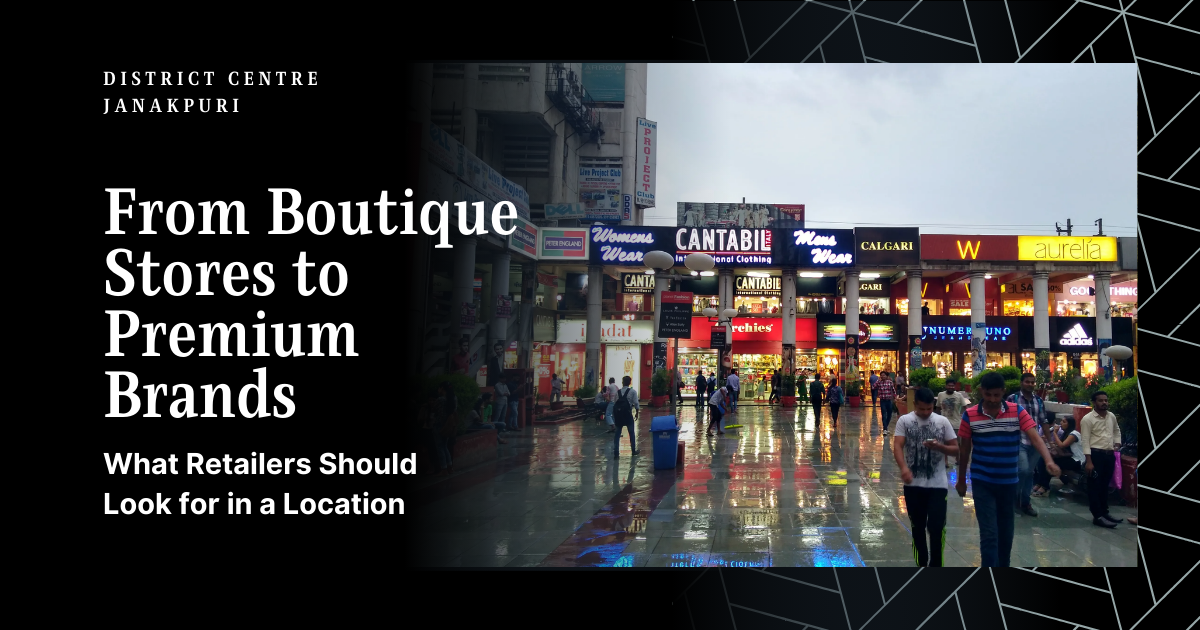
Mixed-use commercial hubs and organized retail areas help maintain a balance. Locations like areas around District Centre Janakpuri often work well because they combine retail, offices, and services in a professional environment.
The surroundings should support—not dilute—your brand image.
Accessibility for Customers and Staff
A good retail location in Janakpuri should be easy to reach.
Check for:
-
Metro and public transport connectivity
-
Road access
-
Parking availability
-
Safe walking paths
Customers avoid stores that are difficult to reach, no matter how good the products are. Staff retention also depends on how convenient daily travel is.
Retailers often underestimate how much accessibility affects repeat visits.
Rent Must Match Revenue Potential
One of the biggest mistakes retailers make is overpaying for location.
High-rent locations demand high and consistent sales. Before committing, calculate:
-
Expected daily footfall
-
Conversion rate
-
Average bill value
-
Monthly fixed costs
Then assess whether the location realistically supports these numbers.
A boutique store with strong margins may handle moderate rent well. A premium brand with higher operating costs must be even more careful.
Profitability matters more than prestige.
Competition Can Be an Advantage, If Planned Right
Retail clusters exist for a reason.
Being surrounded by similar or complementary brands can increase customer visits. People prefer areas where they can compare options or shop multiple stores in one trip.
However, entering a crowded market without differentiation is risky. Study nearby competitors:
-
What price range do they operate in?
-
What do they do well?
-
Where do they fall short?
Your store must clearly stand out.
Infrastructure and Daily Operations
Retail operations require reliable infrastructure.
Ensure the location supports:
-
Power backup
-
Clean water supply
-
Waste management
-
Storage space
-
Internet connectivity
Poor infrastructure creates daily frustration and affects customer experience. Premium brands, especially, cannot afford operational disruptions.
Lease Terms and Legal Clarity
A retail lease is a long-term commitment.
Always review:
-
Lease duration
-
Lock-in period
-
Rent escalation
-
Maintenance responsibilities
-
Exit clauses
Legal clarity protects your investment and gives peace of mind. Flexibility is especially important for boutiques and growing brands that may need to adapt quickly.
Footfall Timing and Patterns
Not all footfall happens at the same time.
Some locations perform best:
-
In the evenings
-
On weekends
-
During festivals
Others see steady weekday traffic due to offices and services.
Understanding these patterns helps you plan staffing, inventory, and promotions. A location with balanced weekday and weekend activity is ideal for long-term stability.
Customer Experience Beyond the Store
Retail success depends on more than what happens inside your store.
Customers care about:
-
Clean surroundings
-
Safety
-
Food and restrooms nearby
-
Overall comfort
Locations that offer a pleasant experience encourage longer visits and repeat customers. Mixed-use hubs naturally support this by offering multiple amenities in one place.
Scalability and Future Growth
Think beyond your first year.
Ask:
-
Can I expand within this area later?
-
Is the area growing or declining?
-
Are new developments planned nearby?
A retail location in Janakpuri West Delhi benefits from ongoing residential and commercial growth, which supports long-term demand.
Choosing a scalable location saves you from costly relocations later.
Marketing Support From the Location Itself
Good locations market your store for you.
Busy, well-known areas bring organic visibility. Customers discover stores naturally without heavy advertising.
While marketing is still important, a strong location reduces dependence on paid promotions and improves walk-in discovery.
Safety and Management Quality
Customers avoid places that feel unsafe or poorly managed.
Look for:
-
Security presence
-
CCTV
-
Clean common areas
-
Professional maintenance
A safe and organized environment builds trust, especially for premium retail brands.
Boutique vs Premium: Key Differences in Location Choice
Boutique Stores should focus on:
-
Discovery-friendly areas
-
Lifestyle-focused customers
-
Moderate rent with strong engagement
Premium Brands should focus on:
-
Professional surroundings
-
Strong brand alignment
-
High-quality infrastructure
-
Consistent customer experience
Understanding where your brand fits helps narrow down the right location.
Final Thoughts
From boutique stores to premium brands, the right retail location can accelerate growth or quietly hold it back.
The best locations align with your customer profile, brand image, operational needs, and long-term vision. They support daily sales, repeat visits, and steady growth.
Instead of asking, “Is this place popular?”
Ask, “Is this place right for my brand?”
That question leads to smarter decisions and stronger retail success.