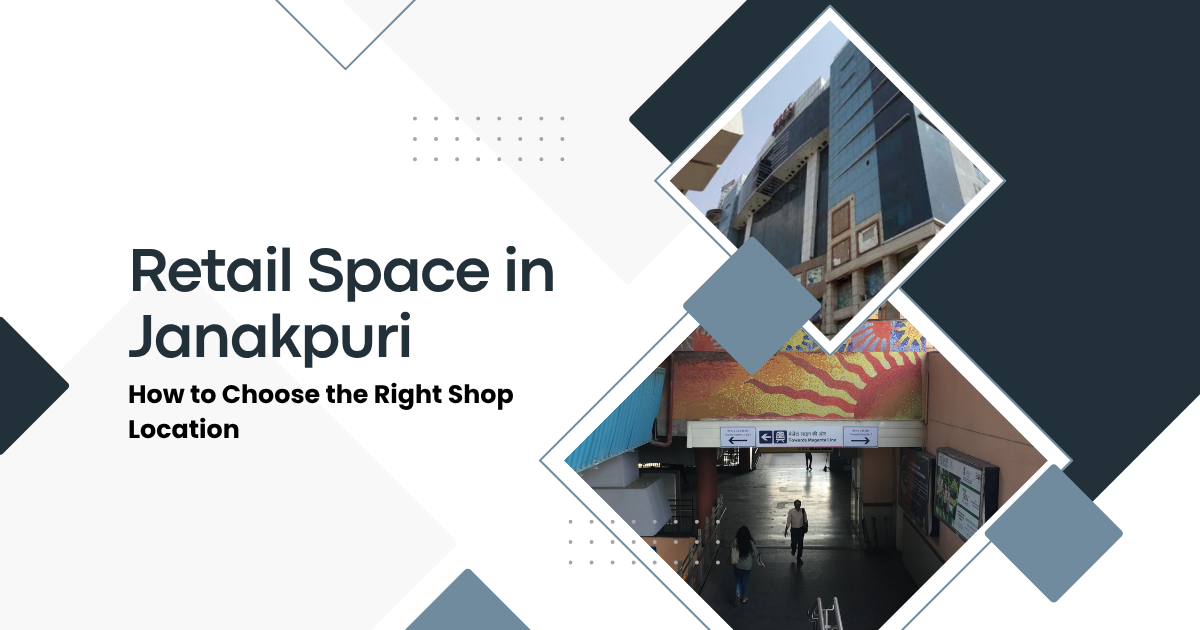
Opening a retail store is an exciting step, but choosing the right location can decide how successful that store will be in the long run. Many business owners believe that high footfall alone guarantees sales. In reality, footfall is only one part of a much bigger picture. The right location must attract the right people, support daily operations, and allow the business to grow over time. This is especially true when planning to open a retail store in Janakpuri West Delhi, where competition is strong and customer expectations are high.
High-footfall areas are busy, visible, and full of opportunity, but they also come with higher costs and greater pressure to perform. Without proper planning, a crowded location can quickly become expensive and difficult to manage. Rent, competition, staffing, and operational challenges can easily outweigh the benefits of foot traffic if the location is not chosen wisely.
Before signing a lease or setting up a store, it is important to understand who visits the area, why they come there, and how they shop. A location filled with people who are in a hurry may not work for all retail formats. Similarly, a place with excellent weekend footfall may struggle on weekdays. These patterns directly affect sales, staffing needs, and inventory planning.
This blog breaks down the key factors every retailer should consider before opening a store in a high-footfall area. From understanding customer behaviour and visibility to managing costs, competition, and long-term growth, the goal is to help you make a confident, informed decision. With the right approach, a high-footfall location can become a strong foundation for sustainable retail success.
Key Takeaways
-
High footfall alone does not guarantee retail success; the quality of footfall matters just as much.
-
Choosing a retail store in Janakpuri West Delhi requires understanding customer behaviour, competition, and buying intent.
-
Visibility, store frontage, and positioning play a major role in converting foot traffic into sales.
-
High-rent locations must be evaluated against realistic revenue and profit expectations.
-
Competition can be healthy, but differentiation is essential in busy retail zones.
-
Long-term growth, operational ease, and legal clarity should always guide location decisions.
Understanding What “High Footfall” Really Means
High footfall simply means a large number of people moving through an area daily. This could be shoppers, office workers, students, or commuters.
However, not all footfall is valuable.
Before choosing a location, ask:
-
Who are these people?
-
Are they potential customers for my product?
-
Are they passing by slowly or just rushing through?
For example, a busy metro exit may have thousands of people daily, but if they are in a hurry, they may not stop to shop. On the other hand, a shopping-focused commercial hub may have slightly lower footfall but higher buying intent.
The quality of footfall matters as much as the quantity.
Matching Your Product With the Crowd
One of the most important decisions is whether your product matches the people visiting that area.
Ask yourself:
-
What age group dominates the area?
-
Are they budget-conscious or premium buyers?
-
Are they locals or visitors?
-
Do they shop for convenience or experience?
A fashion boutique, electronics store, food outlet, or gift shop will all perform differently in the same location.
High-footfall areas work best when your product fits the audience naturally. Without this match, even a crowded location may not generate sales.
Visibility and Store Positioning
In high-footfall areas, visibility can make or break your store.
Being located inside a busy market is not enough. Your store must be:
-
Easy to spot
-
Facing the main walking path
-
Free from obstructions
-
Clearly branded
A store hidden behind other shops or located on an upper floor may receive only a fraction of the footfall.
Good signage, lighting, and frontage help convert foot traffic into walk-ins.
Rent vs Revenue Balance
High-footfall areas usually come with high rent. This is where many retailers struggle.
Before finalizing a space, calculate:
-
Monthly rent
-
Maintenance charges
-
Utilities
-
Staffing costs
-
Inventory expenses
Then ask a simple question:
How many sales do I realistically need every day to cover these costs?
A slightly less busy area with lower rent may sometimes deliver better profits than a prime spot with heavy expenses.
Profitability matters more than prestige.
Competition Around You
Busy retail areas attract many businesses, which means competition is unavoidable.
Before opening your store, study:
-
How many similar stores already exist
-
What price range they operate in
-
What they do well
-
Where they fall short
Competition is not always bad. In fact, clusters of similar stores often attract more customers. But entering a saturated market without differentiation can be risky.
Your store must offer something unique, pricing, quality, experience, or service.
Understanding Customer Behaviour in the Area
Spend time observing the area before committing.
Visit at:
-
Morning
-
Afternoon
-
Evening
-
Weekends
-
Festive days
Notice:
-
When footfall is highest
-
How long people stay
-
Which stores attract attention
-
Where people hesitate or walk past
This real-world observation gives insights that no broker listing can provide.
Infrastructure and Daily Convenience
A retail store needs strong infrastructure to run smoothly.
Check for:
-
Reliable electricity and backup
-
Clean surroundings
-
Proper waste management
-
Water availability
-
Storage space
Also consider customer convenience:
-
Parking availability
-
Public transport access
-
Nearby food and restrooms
Poor infrastructure leads to daily operational stress and unhappy customers.
Legal and Compliance Factors
Retail spaces must follow local rules and regulations.
Ensure clarity on:
-
Commercial usage permission
-
Trade licenses
-
Fire safety compliance
-
Signage rules
-
Operating hours
Many retailers face issues later because these details were ignored at the beginning. Legal clarity protects your investment.
Lease Terms and Flexibility
Always read the lease carefully.
Key things to check:
-
Lease duration
-
Lock-in period
-
Rent escalation
-
Exit clauses
-
Maintenance responsibilities
Retail trends change fast. Flexibility helps you adapt if the market shifts or if your business grows faster than expected.
Seasonal and Festive Impact
High-footfall areas often perform very differently across seasons.
Some locations boom during festivals and weekends but slow down on weekdays. Others maintain steady footfall year-round.
Understand:
-
Festive demand
-
Seasonal sales patterns
-
Weather impact
This helps in planning inventory, staffing, and promotions.
Role of Surrounding Businesses
The type of businesses around you affects your store.
Being near:
-
Apparel stores
-
Cafes
-
Beauty salons
-
Electronics shops
can increase cross-shopping. Customers visiting one store may end up visiting yours.
Mixed-use commercial hubs, such as areas around District Centre Janakpuri, often perform well because they combine shopping, offices, and food options, keeping footfall active throughout the day.
Staffing and Operational Readiness
High footfall means higher customer interaction.
Ensure:
-
Adequate staff during peak hours
-
Trained sales personnel
-
Fast billing and inventory systems
-
Clear return and exchange policies
Poor service can quickly damage your brand, even in the busiest location.
Long-Term Growth Potential
Do not choose a location only for today.
Ask:
-
Is the area developing or declining?
-
Are new projects coming up nearby?
-
Is residential population increasing?
-
Is the area improving in infrastructure?
A retail store in Janakpuri West Delhi benefits from long-term residential and commercial growth, which supports sustained demand rather than short-term spikes.
Marketing Beyond Footfall
High footfall does not replace marketing.
Successful retail stores still invest in:
-
Window displays
-
Local promotions
-
Social media visibility
-
Seasonal offers
-
Loyalty programs
Footfall brings people close to your store. Marketing convinces them to enter and buy.
Financial Buffer Is Essential
Retail businesses take time to stabilize.
Even in high-footfall areas, the first few months may be slow as customers discover your store.
Always plan for:
-
6–9 months of operating expenses
-
Initial slow sales
-
Unexpected costs
This buffer protects you from early pressure and poor decisions.
Final Thoughts
Opening a retail store in a high-footfall area can be a powerful growth move, but only when done thoughtfully.
Footfall alone does not guarantee success. The right customer profile, visibility, cost balance, competition awareness, and operational planning all matter equally.
A well-chosen high-footfall location supports steady sales, strong branding, and long-term growth. A rushed decision can turn a busy street into an expensive mistake.
Instead of asking, “Is this place crowded?”
Ask, “Is this place right for my business?”
That question makes all the difference.