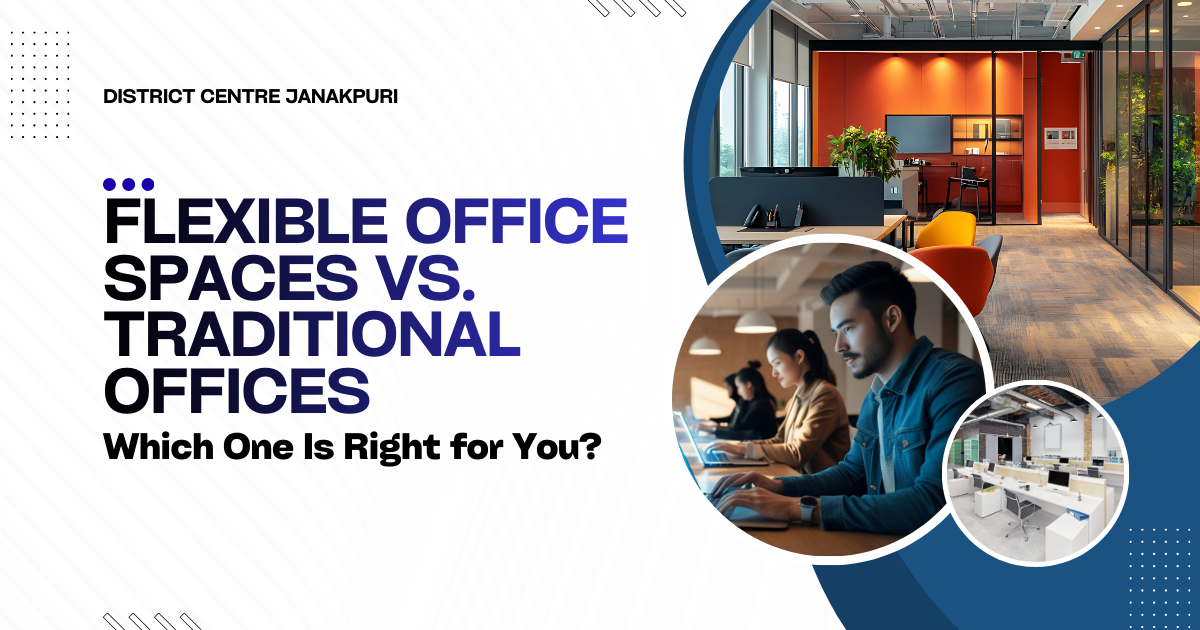
Choosing the right office space is a big decision for any business. Your office is not just a place where people sit and work—it shapes how your team performs, how clients see you, and how easily your business can grow. In today’s changing work culture, businesses are no longer limited to one option. The choice between flexible office spaces and traditional offices has become an important conversation. For many start-ups and growing companies, flexibility has become a priority. Teams are expanding faster, work styles are changing, and long-term commitments can feel risky. This is why a flexible office space in Janakpuri West Delhi has gained attention among businesses that want convenience, speed, and adaptability. At the same time, traditional offices still hold strong value for companies that want stability, privacy, and complete control over their workspace.
The challenge is understanding which option truly fits your business needs. A flexible office might seem easier at first, but may not support long-term branding. A traditional office might offer control, but could limit flexibility during uncertain growth phases. Choosing the wrong setup can lead to unnecessary costs, frequent relocations, or operational stress.
This blog helps you understand the real differences between flexible office spaces and traditional offices. Instead of focusing on trends or opinions, it looks at practical factors such as cost, scalability, employee comfort, privacy, and long-term value. By the end, you will have a clearer idea of which workspace model aligns best with your business goals, especially if you are planning to operate or expand in West Delhi.
Key Takeaways
-
Choosing the right office space impacts productivity, team culture, and long-term business growth.
-
A flexible office space in Janakpuri West Delhi offers speed, convenience, and adaptability for startups and growing teams.
-
Traditional offices provide greater control, branding freedom, and privacy for established businesses.
-
Flexible offices reduce upfront costs and management responsibilities but offer limited customization.
-
Traditional offices suit businesses with stable teams and long-term plans.
-
The best choice depends on your business stage, budget, and growth strategy.
Understanding Flexible Office Spaces
Flexible office spaces are designed to adapt to changing business needs. These include managed offices, serviced offices, and shared workspaces where businesses can move in quickly without heavy setup.
In a flexible office, most things are already taken care of. Furniture, internet, electricity, maintenance, security, and sometimes even meeting rooms are included. You pay a single monthly fee and focus on running your business.
For many businesses in West Delhi, especially those exploring a flexible office space in Janakpuri West Delhi, this model has become attractive because it removes many early-stage challenges.
Flexible offices are built for speed, convenience, and adaptability.
Understanding Traditional Offices
Traditional offices follow the more conventional approach. You lease an empty or semi-furnished space for a longer period, usually several years. The business handles interiors, furniture, utilities, and daily management.
This setup offers complete control. You decide how the office looks, how teams are seated, and how the space reflects your brand identity.
Traditional offices are often chosen by established businesses that have stable teams, predictable growth, and long-term plans.
Cost Comparison: Short-Term vs Long-Term Thinking
One of the first things businesses consider is cost.
Flexible offices usually have a higher monthly cost per seat, but they save money upfront. There is no large investment in interiors, furniture, or deposits. This makes them ideal for startups and growing teams that want to preserve cash flow.
Traditional offices often have lower rent per square foot, but the initial setup cost is high. Interiors, furniture, deposits, and maintenance can add up quickly. Over time, traditional offices may become more cost-effective for larger teams, but only if the space is used efficiently.
The key difference is how costs are spread. Flexible offices reduce risk early on. Traditional offices reward stability over time.
Speed and Ease of Setup
Time matters, especially for growing businesses.
Flexible offices allow teams to move in almost immediately. This is useful when businesses need space quickly or want to avoid operational delays. There is no waiting period for interiors or approvals.
Traditional offices take time. From finalizing the lease to completing interiors, the process can take weeks or even months. This delay can slow down operations, especially for startups eager to scale.
If speed is important, flexibility wins.
Flexibility During Business Growth
Growth rarely happens in a straight line. Teams expand, roles change, and business models evolve.
Flexible offices allow businesses to add or reduce seats easily. If your team grows faster than expected, you can expand without relocating. If plans change, you can downsize without long-term penalties.
Traditional offices offer limited flexibility. Expanding often means moving to a new space, and downsizing still leaves you paying for unused area. This can become a burden during uncertain phases.
For businesses expecting change, flexibility provides breathing room.
Brand Identity and Customization
Brand identity becomes more important as businesses grow.
Traditional offices allow complete customization. From layout to branding, everything reflects your company culture. This can be important for client-facing businesses or companies that want to create a strong internal identity.
Flexible offices offer limited customization. While they look professional, they may not fully reflect your brand personality. Shared spaces also reduce exclusivity.
If brand presence is a priority, traditional offices offer more control.
Employee Experience and Work Culture
The office environment plays a major role in how employees feel at work.
Flexible offices often provide modern interiors, common areas, and shared amenities. These spaces encourage interaction and can feel energetic and motivating, especially for younger teams.
Traditional offices allow businesses to design the workspace around their culture. Quiet zones, collaboration areas, and customized layouts support specific working styles.
The right choice depends on your team’s preferences and the type of work you do.
Privacy and Security Considerations
Privacy is another important factor.
Flexible offices often involve shared spaces, which may not suit businesses handling sensitive data or confidential discussions. While private cabins are available, complete isolation can be limited.
Traditional offices provide full control over security and access. This makes them better suited for businesses in finance, legal, or consulting sectors.
If confidentiality is critical, traditional offices may be the safer option.
Infrastructure and Daily Management
Managing an office takes effort.
In flexible offices, infrastructure and maintenance are handled by the operator. This reduces administrative workload and allows businesses to focus on core operations.
Traditional offices require in-house management or external vendors. While this gives more control, it also increases responsibility.
Businesses that want simplicity often prefer flexible setups.
Location Advantage in West Delhi
Location plays a big role in this decision.
Commercial hubs in West Delhi—especially areas around District Centre Janakpuri—offer both flexible and traditional office options. These areas are well-connected, professionally active, and surrounded by essential amenities.
Choosing the right location ensures accessibility for employees, convenience for clients, and long-term relevance.
A good location enhances the value of both flexible and traditional offices.
Which Option Is Right for You?
There is no one-size-fits-all answer.
Flexible office spaces are ideal if:
-
You are a start-up or small team
-
You need quick setup
-
Your growth plans are uncertain
-
You want minimal management responsibility
Traditional offices are better if:
-
Your team size is stable
-
You want full branding control
-
You handle sensitive information
-
You plan to stay long-term
The right choice depends on your business stage, budget, and growth strategy.
A Hybrid Approach Is Also Possible
Many businesses today choose a hybrid approach.
They start with flexible offices during early growth and shift to traditional offices once operations stabilize. Some maintain flexible offices for satellite teams while running headquarters from a traditional space.
This balanced approach allows businesses to enjoy the benefits of both models.
Final Thoughts
Choosing between flexible office spaces and traditional offices is not about which option is better—it is about which option is right for you.
Flexible offices offer speed, adaptability, and ease. Traditional offices offer control, identity, and long-term stability. Both can support growth when chosen thoughtfully.
If your business values agility and low commitment, flexibility may be the right step. If your business values permanence and brand control, a traditional office may serve you better.
The smartest decision is one that aligns with how your business works today—and how it plans to grow tomorrow.